Lakeview Apartments!!

Bella Vista 1-bedroom holiday rentals
Heart of Stresa Apartments!!

Stresa Apartments 1-bedroom holiday rentals
STRESA WEATHER

Click for Forecast
2019 DATES COMING SOON

CLICK HERE!
STRESA MAP

Malpensa / Stresa Bus
.jpg)
Available From 1 April to 13 Oct 2019 - Click to Book -
.jpg)
Tuesday, January 22, 2013
History: Three Museums Of Traditional Occupations
 7:02 AM |
  Dana Kaplan,
Stresa Sights
Dana Kaplan,
Stresa Sights

History buffs, this one's for you. With about 1000 years of visible and recorded history, one can be kept happily and endlessly entertained exploring the past here. Helping with this task are an almost staggering number of small museums, each focusing on one specific aspect of the past.
For example, these three small museums each pay homage to particular occupations that were prominent in this region centuries ago. At that past time, they were each a true culture in which one was born, lived and died. And many locals can claim, proudly, that their ancestors performed one of these trades: Umbrella makers, chimney sweeps, and hat makers, these museums salute you.
For example, these three small museums each pay homage to particular occupations that were prominent in this region centuries ago. At that past time, they were each a true culture in which one was born, lived and died. And many locals can claim, proudly, that their ancestors performed one of these trades: Umbrella makers, chimney sweeps, and hat makers, these museums salute you.
1. Musee dell'ombrello e del parasole (The Umbrella Museum)


The word ombrello is derived from the latin 'umbra', meaning shade. An umbrella, which was at first truly a parasol, provided a small bit of shade from the sun, and its use can be traced back centuries in Asia. However, when it comes to the use of an umbrella to protect one from the rain, and in particular the modern folding umbrellas, this innovation can be traced to several inventions here in the region of Piemonte. But you can learn all this, and so much more, when you come to visit the modern Museo dell'Ombrello e del Parasole in Gignese. Gignese is located up the mountain from Stresa, on the way to Mottarone, and can be reached by car and by public bus from Stresa. A visit here is a perfect rainy day activity. :-)

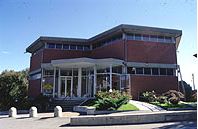
Inside, the main space of the museum is shaped as if you are under gigantic umbrellas. There are more than 1000 umbrellas and parasols on display. The history of these local umbrella-makers is quite fascinating A very protective and insular group, they developed a true culture all there own, so much so that they had their own dialectal language, understood only by them, and further creating an exclusivity to their ranks. Umbrellas made here were prized throughout Europe for their beauty and quality. How proud are the locals of their umbrella-making past? Well, the cat holding umbrella statue in front of the church in neighboring Carpugnino is one sign... There is some additional interesting information about this history on that post.
www.gignese.it/museo/
via Golf Panorama, 2
28836 Gignese (VB)
Tel: 0323 89622
Fax: 0323 208064
The museum is open from April 1 through September 30, closed on Mondays (unless the Monday is an official holiday, in which case it is open). Hours are 10:00 am to noon, and again from 3:00 pm to 6:00 pm.
As of this writing, admission is 2.50 euro, with reduced prices for groups and students.
( continued ... )
2. Museo dello Spazzacamino
The Valle Vigezzo was traditionally a very poor region, over the centuries losing may of its people through emigration to France, Holland, and Germany. One trade which the valley inhabitants had, however, and brought with them wherever they emigrated, was that of chimney sweep. So well known did they become for their expertise in this necessary business, that poor families would send their young children away to the chimney sweep companies for the season, to earn what they could. Many of the sweeps were young children between the ages of six and twelve, their small size being an advantage. They were called 'Piccoli Rusca'.

This practice continued for centuries, from the middle ages until the mid-twentieth century, when modern chimneys and heating systems rendered this type of chimney sweep obsolete. The museum, opened since 1983, is housed in a beautiful building in Santa Maria Maggiore, in the heart of the valley. In it, one can have the experience of walking through a large, horizontal chimney, to experience what it is like inside the flue. Through this, as well as tools, photographs, and personal accounts, one comes to understand this is a profession of which these people are extremely proud.


So proud, in fact, that each summer in Santa Maria Maggiore there is an annual gathering of chimney sweeps, people whose ancestors were connected with this trade. The festival will be in its 32nd year in 2013; each year now more than 1200 'sweeps' convene here for a four-day festival celebrating their heritage.
A museum visit here can be combined with a journey on the Lago Maggiore Express by exiting the train in Santa Maria Maggiore. Contact the museum in advance to be certain of opening hours. If you are visiting Valle Vigezzo by car instead, you can also stop in another valley town, Malesco, and view the bronze chimney monument there, created by sculptor Luigi Teruggi.

www.museospazzacamino.it
Museo dello Spazzacamino
Piazza Risorgimento, 28
28857 Santa Maria Maggiore
Tel: +39 0324 905675
For information and hours contact: info@comune.santamariamaggiore.vb.it
3. Museo dell'Arte del Cappello
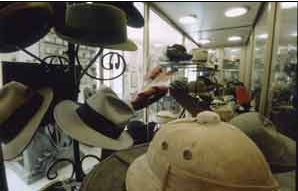
Back in the nineteenth century, Cappellificio Panizza, hat makers, opened this factory in Ghiffa, on the shore of Lago Maggiore, just past Verbania when driving up the lake toward Switzerland. For exactly on hundred years they produced hats here, closing in 1981. Now, the facility is a museum dedicated to the craft. Separated into two areas, one houses equipment, while the other demonstrates the hat-making process. Throughout, there are also old advertising posters and ancient hats illustrating the changing styles of hats through the centuries. All visits here are guided, and that, along with the old photographs and videos, give a good understanding of life in this factory at that time.

www.museodellartedelcappello.it
Museo dell'Arte del Cappello
Corso Belvedere, 279
28838, Ghiffa (VB)
Tel: 0323 59209 or 0323 59174
museocappelloghiffa@libero.it
Open Saturdays and Sundays, from April through October, usually from 3:30 to 6:30 (last entrance being at 5:30). Other times of the year the museum can be opened through appointments for groups. Entrance is free.
These are but three of countless little hidden gems to discover in the area. They teach how things were here, long before it was all about aperitivi on the lake. But mostly, I think they exude an enormous pride that the people of the area have, for their region and for their hard work and heritage.
photographs courtesy of the respective museums
 Labels:

PLANNING A TRIP TO STRESA?

A Top Attractions Starting Point
VACATIONS AND WORKSHOPS

Before or after Stresa, plan more of your trip to Italy with Villa Vita!
CURRENCY CONVERTER

Click here for a fast and easy currency converter.
STRESA SIGHTS by DANA KAPLAN
