Lakeview Apartments!!
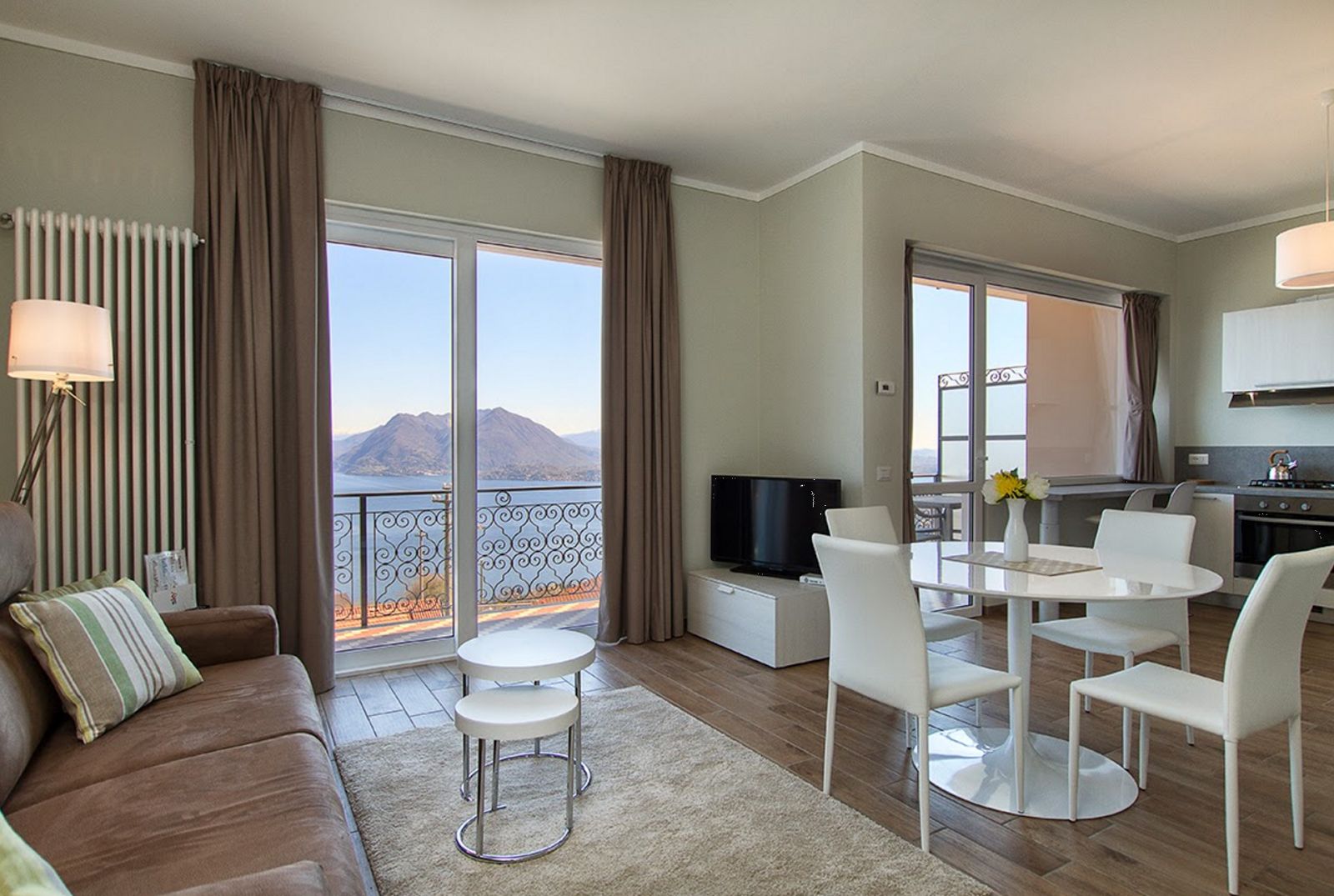
Bella Vista 1-bedroom holiday rentals
Heart of Stresa Apartments!!
Stresa Apartments 1-bedroom holiday rentals
STRESA WEATHER

Click for Forecast
2019 DATES COMING SOON

CLICK HERE!
STRESA MAP

Malpensa / Stresa Bus
.jpg)
Available From 1 April to 13 Oct 2019 - Click to Book -
.jpg)
Monday, February 19, 2018
Welcome to Stresa Sights, And Hopefully To Stresa!
 1:35 AM |
  Dana Kaplan,
Stresa Sights
Dana Kaplan,
Stresa Sights
WELCOME TO STRESA SIGHTS, AND HOPEFULLY TO STRESA!
Are you here because you are coming to Stresa on holiday? Or are you here deciding whether it will be your next vacation location? Either way, welcome! This blog, which began in 2008, contains information and resources that hopefully will be useful to you. Information is regularly updated, so that, even if a post is older, the links and information contained in it should be current.
The best way to use the blog is to use the search bar, if you are looking for specific information, or to choose a subject that interests you, such as "Outdoor Activities," and read through the posts on that list. Many will have links leading you to other websites to continue and expand your research.
The blog also has links and information on some very popular searches, such as the information for the Alibus shuttle bus between Malpensa Airport and Stresa, the Stresa Music Festival, Trenitalia, and the Stresa ferries (Navigazione Laghi), as well as handy information for once you are here in Stresa, such as where to park, where the supermarkets are, and so on.

 Labels:
news and information
Labels:
news and information

Friday, February 9, 2018
2019 Dates: Borromee Islands, Other Attractions, Open
The Borromeo islands, Villa Taranto, Rocca Angera and Parco Pallavicino are all getting ready to open again. The winter hibernation is over, and the 2019 season is beginning! And as you can see from the following photographs, everything else in Stresa is opening too:


( Continued ... )
Labels:
news and information
Sunday, January 14, 2018
Information About The Alibus Shuttle From Malpensa To Stresa - 2019

Your shuttle bus will look like this or similar, with, most likely, this S.A.F. logo on it, not Alibus.
For those of you making your spring or summer plans to come to Stresa, here is the information on the Alibus shuttle between Malpensa Airport and Stresa:
Things You Need To Know About Alibus:
What Is The Alibus Operating Schedule?
For 2019 Alibus will begin service to Stresa and Lago Maggiore on April 1, and will run until October 13. It runs seven days a week. The earliest bus each day leaves Malpensa around 8:30 am and the last bus each day leaves Malpensa around 9:00 pm. The trip to Stresa takes one hour. For the returns to Malpensa, the earliest bus leaves Stresa each day around 6:30 am and the last bus leaves Stresa each day around 7:30 pm, arriving at Malpensa one hour later.
Labels:
transportation
Sunday, December 10, 2017
Outdoor Sports And Activities List
 So you're the outdoorsy type. For you a vacation is more what you do, rather than what you see. No problem here on Lago Maggiore, there are enough diverse summer outdoor activities and sports to keep you busy. Here is a compilation of different activities you can enjoy outdoors in and around Stresa.
Outdoor Sports and Activities
Swimming
Lago Maggiore Zipline
Golf
Tennis
Windsurfing
Boating
Mountain Biking
Fishing
Walking
Rock Climbing
Rafting and Canyoning
Photo credit: Windsurfing-for-Web
Lago Maggiore Zipline
Golf
Tennis
Windsurfing
Boating
Mountain Biking
Fishing
Walking
Rock Climbing
Rafting and Canyoning
It sounds like fun, no? Of course, there are other sports too, if you are interested in one that you don't see here, just ask. Now take a look here for more ideas:
Top Ten Things to See in Stresa
Top Ten Things to See in Stresa
Photo credit: Windsurfing-for-Web
Wednesday, July 12, 2017
La Baia Rosa Bistrot - Stresa

La Baia Rosa Bistrot is the restaurant part of the Baia Rosa complex, which also includes La Baia Rosa pool and beach. Directly next to the beach and entrance to the pool, the restaurant is not, however, exclusively for their patrons; the main entrance faces the Carciano parking piazza, also near the cableway ticket office and station. Which means, yes, you have the awesome views of the gondolas arriving and departing, whether dining outside on their lakefront terrace or inside at the window bar. Not a bad view of the lake either... Inside, the decor is cool and casual. The restaurant serves everything from pizzas, salads, and sandwiches to full meals, and is open as a bar every night until midnight (except Wednesdays).


 Labels:
restaurants
Labels:
restaurants
Friday, June 30, 2017
Water Lily Pond In The Gardens Of The Grand Hotel Des Iles Borromees

Where is this in Stresa? It's the water lily pond in the gardens of the Grand Hotel des Iles Borromees. The small pond is stocked with multicolored carp imported from Japan, and the entire pond and area surrounding it is a carefully balanced ecosystem where water, plants, and animals exist together in perfect harmony.
If you like gardens, don't miss a stroll through the park at the five-star Borromees. It's open to the public, just enter from the main driveway at the left side of the hotel.
But if you really like gardens, do your homework first; there's a lot of interesting information and statistics about the garden on the hotel website. They are rightly quite proud of the garden; some trees and features were here even before the hotel was built in 1863 and have been incorporated into the design. The rest is constantly evolving, with the seasons and the years.
Read about it, and then stroll, sit on one of the benches, and enjoy.
Labels:
gardens
Wednesday, June 21, 2017
Parco Naturale Dell'Alta Valle Antrona

Just about an hour easy drive from Stresa, the Parco Naturale dell'Alta Valle Antrona offers many walks, from easy to difficult, from 40-minute strolls around tiny lakes, to day journeys for serious trekking. There are 18 natural lakes here, and six man-made lakes.

At Lago Camplicciolo walk along the tracks of an old mining train and through mining tunnels

At around 1,400 meters altitude

That particular color of some Alpine lakes - Lago Camplicciolo


Walk under a waterfall at Lago Antrona


Just as an example, here's what we did: We drove to Lago Camplicciolo (an artificial lake created by one of the hydroelectric dams), parked the car there, and we walked the 1.5 hour giro del lago (loop around the lake). Once back at the car we drove back down to Lago Antrona, had a relaxed lunch at Ristorante Bar Lago Pineta, and after a hearty lunch walked from there around Lago Antrona (there are charming picnic areas distributed all around the lake as well). This second lake loop took only 45 minutes.
Take a look at these websites for tons of information: http://www.valleantrona.com/ and http://www.parcovalleantrona.it/Eindex.php
Tuesday, June 20, 2017
Hiking Trails For Stresa And Beyond

For you serious hikers, below are links to very detailed hiking maps for Stresa and the surrounding area, encompassing the area from Feriolo to past Lesa, and up and over Mt. Mottarone. Many of the trails link two towns, where sometimes it will be possible to take public transportation, or one of the ferries, back to your staring point. The second link gives detailed information about some of the most common trails. The pdf pages are downloadable and printable. Happy hiking!
Saturday, June 17, 2017
"Il Carlone" Statue Of San Carlo Borromeo

Have you visited "il Carlone" (Big Carlo) yet? It's fascinating. Interesting facts about this hollow bronze statue: It was built to commemorate San Carlo Borromeo, who was born in 1538 in the Borromeo fortress that at that time stood where now the ruins of la Rocca are. His parents, Lord Giberto II and Lady Margherita Medici of Marignano, ruled over much of the lake. Choosing a religious life, San Carlo was appointed Archbishop of Milan on 12 May 1564, and, some years after his death in 1584, Pope Paul V canonized Carlo on 1 November 1610. This statue built in his honor was completed in 1698, a collaboration between the designer Giovan Battista Crespi, better known as “Il Cerano” and the sculptors Siro Zanella and Bernardo Falconi.

It is truly a masterpiece of engineering. Until the building of the Statue of Liberty this was the tallest hollow bronze statue in the world, and is still number 2. In fact, Frédéric Auguste Bartholdi, who designed the Statue of Liberty, came to Arona to study the statue’s structure. A plaque can be found at the foot of the Statue of Liberty commemorating the inspiration given by the ‘Sancarlone’, now no longer the largest statue in the world.
The statue is 90 feet (35 meters) tall. You can climb to the top, with a fascinating view of the internal structure, and, at the top, gaze through various windows. The climb consists of a spiral staircase, and then a long ladder to the top.


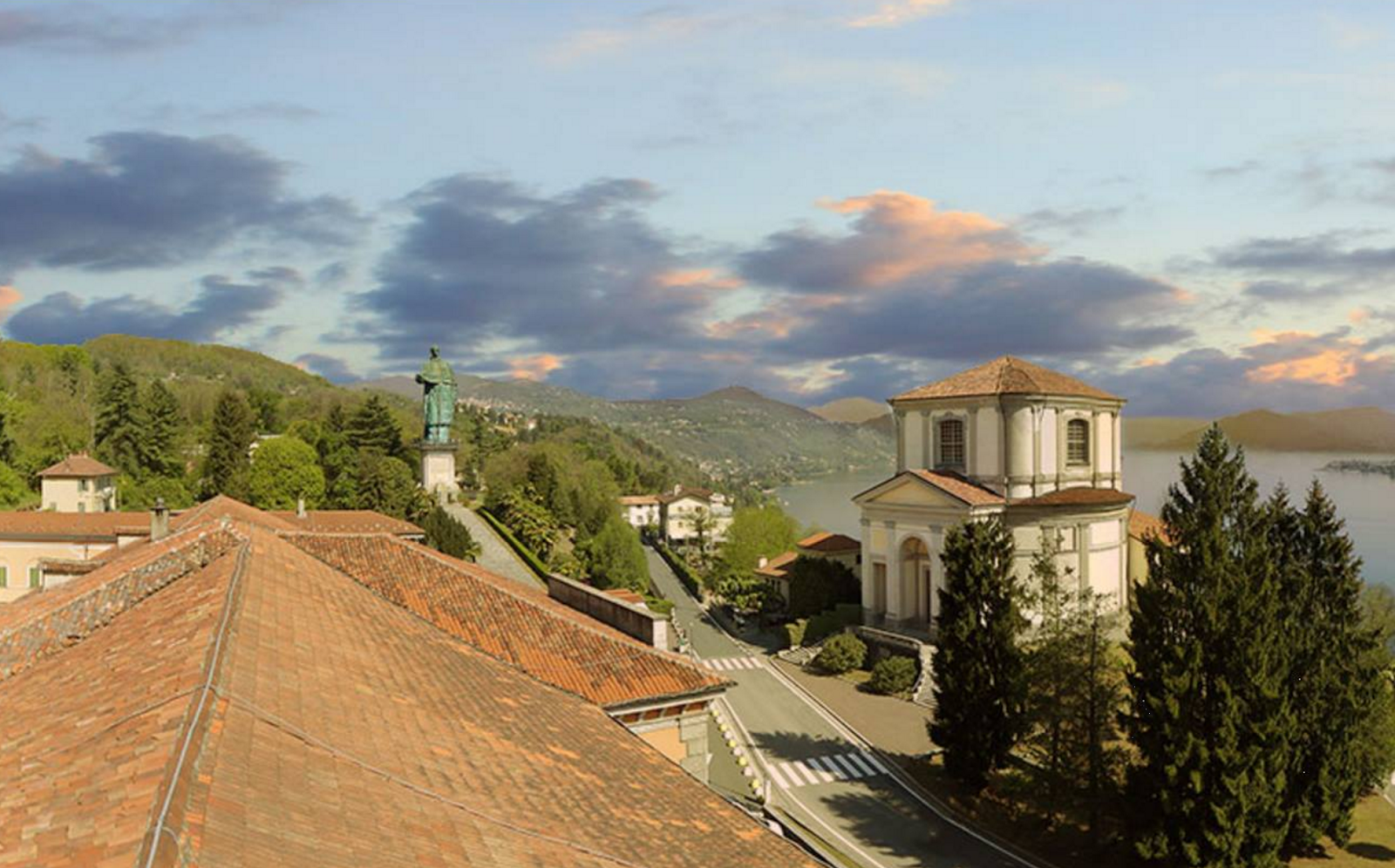
Ready for it? Intrigued? Get all the information on the website. San Carlo is just outside Arona, easily reachable by car.You can also visit the gardens, the church, and the small Sacre Monte. Directions, ticket information, and much more can be found here: www.statuasancarlo.it
all photos courtesy of the main website
Labels:
places to go and day trips
Thursday, June 1, 2017
The Borromean Motto, Shield, And Symbol History

Borromeo fun facts. If you're observant, you may notice the Borromeo motto, "humilitas," in many places around Stresa. Or maybe you've seen the recurring unicorn symbols, and perhaps also a camel. But do you know what these seemingly dissimilar symbols signify to the Borromeo family? Why they're important and what they mean? Here, from the Isole Borromee website, is how to decipher the symbols found in the center of the Borromean seal:
* The unicorn entered the emblem of the Borromeo family in 1445. According to the tradition, it symbolizes honor, virtue and devotion.
*The camel that rests in a basket with a crown of ostrich feathers on his back symbolizes obedience, patience, and fealty.
*The three gold circles, known as the Borromean Rings, are linked together in such manner that the removal of one will break them all. This symbolized the unbreakable bond between the Borromeo, Sforza, and Visconti families. (Google Borromean Rings to learn more about this mathematical phenomenon.)
*The silver riding bit recalls the heroic deeds of Giovanni Borromeo, who defeated the Swiss forces that threatened the feudal possessions of the family in 1487. Since then, it represents strength.
*The golden cedar leaf recalls the gardens of Isola Bella and Isola Madre. It symbolizes the mild weather of the place.
*The motto “HUMILTAS,” written in a black, gothic font, appeared for the first time in 1445 and became the motto of San Carlo Borromeo, pointing out the humility one needs to reach God.
*The blonde braids refer to Santa Giustina, whose sacrifice ennobled the family.
*The waves refer to the ancient crest of the Vitaliani family of Padova.
*The wings refer to the Arese family that joined the Borromeo in 1652 with the wedding of Earl Renato Borromeo and Giulia Arese.
So keep your eyes open. When going through the palace on Isola Bella try to count all the unicorns you can find. And not only on the Borromean Islands, but on their other properties and even in Milan. You'll be surprised how often you see signs of Borromean presence. They may have believed in "humilitas," but also proud to show signs of that everywhere they went.


For lots of interesting information about the Borromeo properties, as well as visiting information and online ticket sales, visit: http://www.isoleborromee.it/eng/storia-borromeo-stemma.html
These have been just a few photos to get you started; you'll find many examples once you start to look.
Labels:
history
Meditation Path, Isola San Giulio, Orta

Shhhh.... We're walking on the silent path that encircles the Basilica di San Giulio, on Isola San Giulio, in Lago d'Orta. Walk the short circle in one direction, and then turn around and walk it in the other. Why? To read the signs which are hung every few meters along the path. In one direction you are taking the "Way of Silence," and the messages on the signs are reminders to be silent, to be aware of the wind, the water, the sound of your steps, and to learn in the silence. Read it as a poem as you go. In the other direction, you are on the "Way of Meditation," which offers thoughtful phrases, such as, "Every journey begins near to you." Read the thought, and meditate on it as you continue to the next sign.
I won't print out all the words here; I want you to discover them on your own.
And take time to notice other beautiful details along the way... It's a short walk, with a lot of beauty in a small space.


Make this part of a day trip to Orta, our neighboring lake with so much charm of its own.
Labels:
places to go and day trips
Saturday, May 20, 2017
The Painted Village Of Legro, Near Orta

When you're driving to Orta, before parking the car in the large parking lots near the historic city center, or once you leave, take a very quick detour and go to see the interesting little village of Legro, just a couple of minutes outside of the town of Orta.
Since 1998 Legro has been a part of a rather special group of 127 Italian towns, the L'Associazione Italiana Paesi Dipinti, the Association of Italian Towns. Many walls of the tiny village are painted with colorful frescoes. The subjects of the murals painted on the walls of the village were mostly inspired by the work of the local poet and writer Gianni Rodari, and by films made in the Lake Orta area. I've posted a few photos I took on a recent drive through the town; I'll leave you to discover the rest on your own!


Legro is a frazione of Orta (a small town, part of the larger town), and is where the Orta-Miasino train station is. The map with the arrow shows the location. There's some parking around the station, and a fun birreria as well, if you want to walk around. If you only have a few minutes, a drive slowly around the narrow, pretty streets of the village will take you past many of the paintings.
 Labels:
places to go and day trips
Labels:
places to go and day trips
Friday, May 12, 2017
Ristorante Luci Sul Lago: A Hidden Spot Near Orta

Shhh... Let's call this one of those "secret" places, slightly off the beaten tourist track. For those of you visiting Lake Orta by car, after you visit the town, take the boat out to Isola San Giulio, walk through the Sacro Monte, after all that, if you would like a tranquil spot to reflect on your day in Orta, look for Luci sul Lago, located in a quiet little bay just outside the town of Orta, on the road to and from Stresa.

They offer everything from a simple aperitivo, to light meals and pizzas, to formal meals. We stopped there for a Sunday morning aperitivo and decided to stay for lunch. You can even cater weddings and events here, and when you see the location you'll see why. There's a beach club on one side, offering rental paddle boats, and a grass park area on the other, where you can picnic. And there is parking, if you get there at a lucky time. Otherwise, park along the road, as you will see everyone else doing.

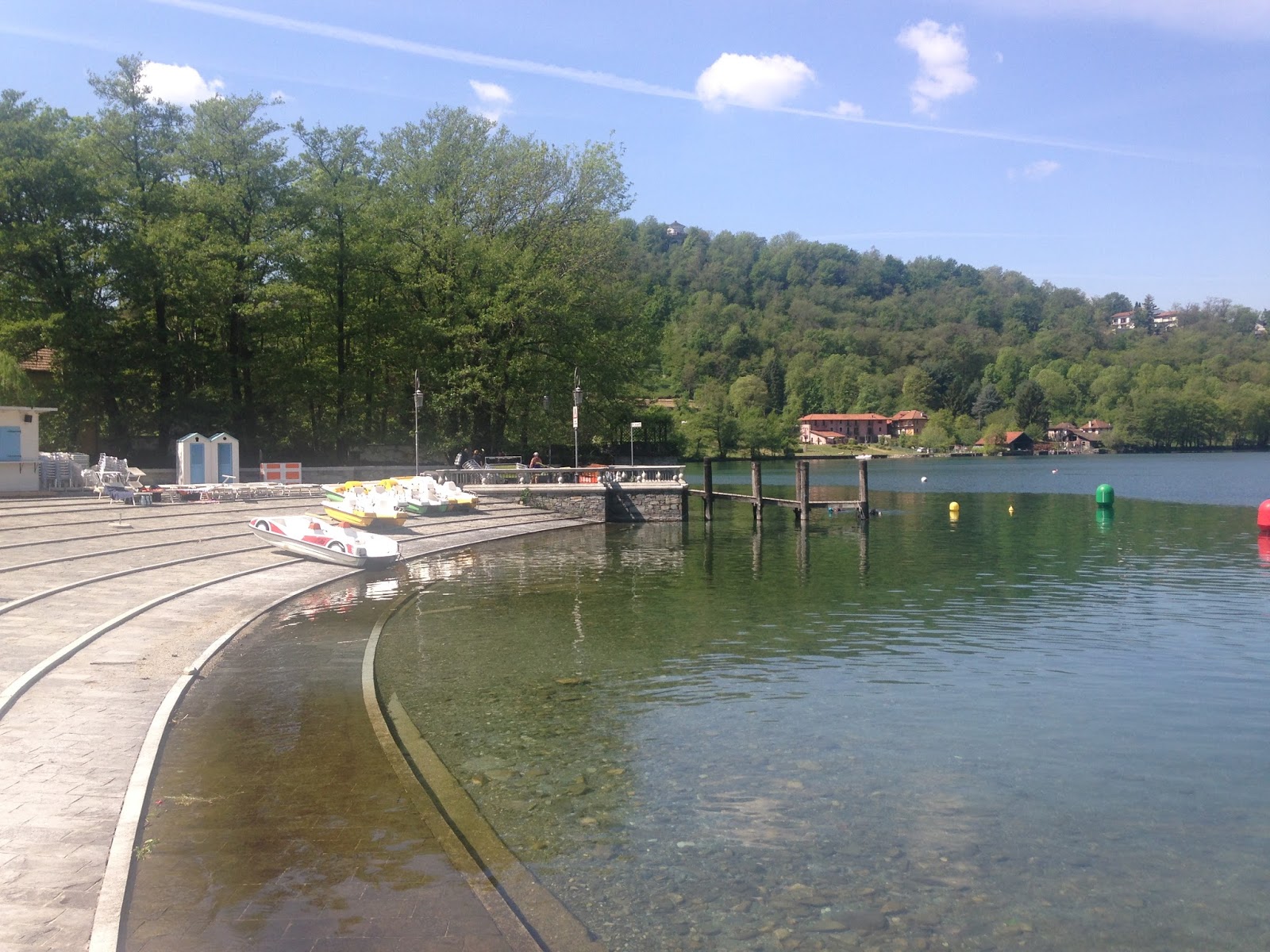

Take a look at the gorgeous photos on their website; you'll want to make this your "secret" place in Orta too.
Website with all information: www.lucisullago.com
Labels:
restaurants
Wednesday, May 3, 2017
Gardens Of Stresa And Nearby

Whether you are an avid gardener who plans your vacations around visiting great botanical parks, or just appreciate the beauty of nature, Stresa is a perfect destination for you. It's not for nothing that it has been voted one of the most floral small cities in Italy! We've spoken about and visited several of the gardens close to Stresa in other posts, now let's list them all together here in one place as a helpful planning guide. Trust me... even if you don't consider yourself a plant person, try to fit at least one garden visit into your itinerary. These are all as particular to Stresa as are the Borromean Islands, and every bit as impressive. Here are the main gardens in or near to Stresa:

Palazzo Borromeo, Isola Bella:
Speaking of the islands, this garden is located there. Enter the fantastical Italianate Baroque-style garden on Isola Bella by going through the Palazzo Borromeo. Designed in the 1600s by the early Borromeo developers of the island, the gardens are unique for the ten tiers of terraces, the large shell statuary 'stage' that greets you after exiting the palace, dozens of statues, obelisks and columns, and of course, the symbol of the Borromees, the unicorn, who presides over it all from above. Look for individual gardens such as il Giardino d'Amore, the Azalea garden, and the Giardino di Fiori. Take photos of the very tame white peacocks that stroll the grounds. Consider taking a guided tour or an audio guided through the palace and gardens... you will gain so much more in this way. Take the ferry from either Stresa ferry stop to reach Isola Bella.
Cost: There are many different ticket prices, based on age, whether you are also visiting Isola Madre, la Rocca Anghera or the painting gallery, or whether you would like a guided tour. Visit the chart here to decide.
Main website: http://www.borromeoturismo.it/
_______________
Labels:
gardens
Friday, April 21, 2017
The Laveno "Bucket" Lift


Wow! Look at these views! These photos are from the website of the Funivia del Lago Maggiore, as it's called in Italian, but we all call it the Laveno "Bucket Lift." We call it this because the journey up the mountain is not in a gondola, or a chairlift, but truly in a large bucket that you stand in.

Having taken the ride, I can tell you that it is not as scary as it sounds. Here are some facts: The ride takes 16 minutes, and brings you to the top of Sasso del Ferro, an altitude of 1,100 meters. It's silent, and if you're truly nervous, there are also closed "buckets" you can choose to ride in. At the top, there is a restaurant and a bar, along with a park area, and a launching pad where you can watch the hang gliders, which I found fascinating.

The best way to get there from Stresa is to take the traghetto from Verbania Intra; the traghetto is the car ferry that crosses Lago Maggiore every 20 minutes. Just walk right on... Great views crossing the lake, and the ferry drops you in the town of Laveno Mombello, a charming town to walk around in before or after the trip up the mountain.
Here's the website, for all the information: www.funiviedellagomaggiore.it
Labels:
places to go and day trips
Subscribe to:
Posts (Atom)
PLANNING A TRIP TO STRESA?
A Top Attractions Starting Point
VACATIONS AND WORKSHOPS
Before or after Stresa, plan more of your trip to Italy with Villa Vita!
CURRENCY CONVERTER

Click here for a fast and easy currency converter.
STRESA SIGHTS by DANA KAPLAN