Lakeview Apartments!!

Bella Vista 1-bedroom holiday rentals
Heart of Stresa Apartments!!

Stresa Apartments 1-bedroom holiday rentals
STRESA WEATHER

Click for Forecast
2019 DATES COMING SOON

CLICK HERE!
STRESA MAP

Malpensa / Stresa Bus
.jpg)
Available From 1 April to 13 Oct 2019 - Click to Book -
.jpg)
Showing posts with label history. Show all posts
Showing posts with label history. Show all posts
Thursday, June 1, 2017
The Borromean Motto, Shield, And Symbol History
 11:03 AM |
  Dana Kaplan,
Stresa Sights
Dana Kaplan,
Stresa Sights

Borromeo fun facts. If you're observant, you may notice the Borromeo motto, "humilitas," in many places around Stresa. Or maybe you've seen the recurring unicorn symbols, and perhaps also a camel. But do you know what these seemingly dissimilar symbols signify to the Borromeo family? Why they're important and what they mean? Here, from the Isole Borromee website, is how to decipher the symbols found in the center of the Borromean seal:
* The unicorn entered the emblem of the Borromeo family in 1445. According to the tradition, it symbolizes honor, virtue and devotion.
*The camel that rests in a basket with a crown of ostrich feathers on his back symbolizes obedience, patience, and fealty.
*The three gold circles, known as the Borromean Rings, are linked together in such manner that the removal of one will break them all. This symbolized the unbreakable bond between the Borromeo, Sforza, and Visconti families. (Google Borromean Rings to learn more about this mathematical phenomenon.)
*The silver riding bit recalls the heroic deeds of Giovanni Borromeo, who defeated the Swiss forces that threatened the feudal possessions of the family in 1487. Since then, it represents strength.
*The golden cedar leaf recalls the gardens of Isola Bella and Isola Madre. It symbolizes the mild weather of the place.
*The motto “HUMILTAS,” written in a black, gothic font, appeared for the first time in 1445 and became the motto of San Carlo Borromeo, pointing out the humility one needs to reach God.
*The blonde braids refer to Santa Giustina, whose sacrifice ennobled the family.
*The waves refer to the ancient crest of the Vitaliani family of Padova.
*The wings refer to the Arese family that joined the Borromeo in 1652 with the wedding of Earl Renato Borromeo and Giulia Arese.
So keep your eyes open. When going through the palace on Isola Bella try to count all the unicorns you can find. And not only on the Borromean Islands, but on their other properties and even in Milan. You'll be surprised how often you see signs of Borromean presence. They may have believed in "humilitas," but also proud to show signs of that everywhere they went.


For lots of interesting information about the Borromeo properties, as well as visiting information and online ticket sales, visit: http://www.isoleborromee.it/eng/storia-borromeo-stemma.html
These have been just a few photos to get you started; you'll find many examples once you start to look.
 Labels:
history
Labels:
history

Monday, October 13, 2014
Three Historic Statues Along The Lungolago

I took advantage of a dramatic sky one morning, using it as a backdrop for photos of these three bronze statues found close to each other in the center of the Lungolago. I call these three the historic statues, both because they are among the oldest of the statues along the lake, and because, in contrast to the ones I call the artistic statues, each of these commemorates a significant event or time in Stresa's past.
Let's begin with the above statue, which is the one closest to the Carciano side of the Lungolago, approximately in front of the Hotel des Iles Borromees.

( Continued ... )
Labels:
history
Tuesday, October 7, 2014
History: Lido Carciano - How It Once Was

I am absolutely fascinated by this set of postcards depicting the Lido at Carciano. The images, including some renderings, are from the beginning of the 1900s to just before WWII. They show a Lido you may not have known had existed; a wonderland of a beach, with so many attractions and a dream of a restaurant, suspended high above the lake on stilts. Take a look at what you would have seen and done if you had visited around 1920. All the pictures have been copied from the blog Archivio Iconografico del Verbano Cusio Ossola, with the captions as they were presented, auto-translated into English. There is Isola Bella, unchanged, and perhaps you can spot other familiar landmarks in the area, such as the granite quarry on the Baveno mountain, to place where you are.
( Continued ... )
Labels:
history
Thursday, February 13, 2014
Cupid And Psyche On Isola Bella
For la festa di San Valentino this year, I would like to share with you the beautiful Story of Psyche series of paintings by the French painter Maurice Denis. You'll see why in just a minute. The paintings were commissioned by a wealthy Russian industrialist and art patron, Ivan Moronov, and painted by Denis during 1908 and 1909. When completed, Denis personally brought the paintings to Moronov's Moscow home.
Denis had visited Italy in the 1890s, and the travels greatly influenced him and his art. When Moronov commissioned Denis for the paintings, it was Denis who suggested the story of Psyche and Cupid, because of its "idyllic and mysterious character," he said.
In five of the paintings, Denis used Isola Bella as the setting of the story. And that's why I want to share them with you this Valentine's Day. Here are the paintings, with their titles, and their very familiar Stresa locations:

Cupid is Struck by the Beauty of Psyche. I do believe that is the view of Lago Maggiore from Isola Bella, with the town and mountain of Laveno seen in the back right, and Pallanza Verbania in the back left.
( Continued ... )
Monday, February 3, 2014
Rebora Poetry On A Rock

The rock with the poem is just to the left in this spot.
I was reminded, by the recent post about walking at the Riserva Naturale at Fondatoce, and the poem I mentioned having seen, about yet another poem I saw, this one while walking along the Lungolago. I had noticed this large rock, found pretty much in the area in the photo above, with two small plaques; here are photos of them:


The horizontal plaque on the upper right indicates it is a gift in memory of poet and scholar Clemente M. Rebora. It shows the years of his life as from 1885 to 1957.
( Continued ... )
Tuesday, January 28, 2014
Seen In Stresa: The Stresa Seal

This is the stemma, the seal of the city of Stresa. This current design has been in use since 1914. You will see it everywhere in town:

Above the boat station...

On the Comune building in Piazza Matteotti...
( Continued ... )
Tuesday, January 22, 2013
History: Three Museums Of Traditional Occupations

History buffs, this one's for you. With about 1000 years of visible and recorded history, one can be kept happily and endlessly entertained exploring the past here. Helping with this task are an almost staggering number of small museums, each focusing on one specific aspect of the past.
For example, these three small museums each pay homage to particular occupations that were prominent in this region centuries ago. At that past time, they were each a true culture in which one was born, lived and died. And many locals can claim, proudly, that their ancestors performed one of these trades: Umbrella makers, chimney sweeps, and hat makers, these museums salute you.
For example, these three small museums each pay homage to particular occupations that were prominent in this region centuries ago. At that past time, they were each a true culture in which one was born, lived and died. And many locals can claim, proudly, that their ancestors performed one of these trades: Umbrella makers, chimney sweeps, and hat makers, these museums salute you.
1. Musee dell'ombrello e del parasole (The Umbrella Museum)


The word ombrello is derived from the latin 'umbra', meaning shade. An umbrella, which was at first truly a parasol, provided a small bit of shade from the sun, and its use can be traced back centuries in Asia. However, when it comes to the use of an umbrella to protect one from the rain, and in particular the modern folding umbrellas, this innovation can be traced to several inventions here in the region of Piemonte. But you can learn all this, and so much more, when you come to visit the modern Museo dell'Ombrello e del Parasole in Gignese. Gignese is located up the mountain from Stresa, on the way to Mottarone, and can be reached by car and by public bus from Stresa. A visit here is a perfect rainy day activity. :-)

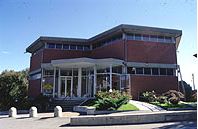
Inside, the main space of the museum is shaped as if you are under gigantic umbrellas. There are more than 1000 umbrellas and parasols on display. The history of these local umbrella-makers is quite fascinating A very protective and insular group, they developed a true culture all there own, so much so that they had their own dialectal language, understood only by them, and further creating an exclusivity to their ranks. Umbrellas made here were prized throughout Europe for their beauty and quality. How proud are the locals of their umbrella-making past? Well, the cat holding umbrella statue in front of the church in neighboring Carpugnino is one sign... There is some additional interesting information about this history on that post.
www.gignese.it/museo/
via Golf Panorama, 2
28836 Gignese (VB)
Tel: 0323 89622
Fax: 0323 208064
The museum is open from April 1 through September 30, closed on Mondays (unless the Monday is an official holiday, in which case it is open). Hours are 10:00 am to noon, and again from 3:00 pm to 6:00 pm.
As of this writing, admission is 2.50 euro, with reduced prices for groups and students.
( continued ... )
Sunday, August 12, 2012
Images Of A Stresa Of Long, Long Ago

"View of Stresa and of Isola Bella in Lago Maggiore"
Shopping around in Stresa this summer, old prints and reprints have been catching my eye everywhere. I often find myself lost for a good long time, going through a stack of old prints safe in their plastic sleeves, or looking intently at racks of postcards featuring them. I find them fascinating...
For example, the print above. Here it is again, a little larger:

It takes only a few seconds to place the view. There is Isola Bella after all... and that must be the road that has become the main street, Sempione Nord, which continues all the way to the Sempione Pass... and oh yes, that must be the church, Chiesa Parrocchiale di Sant'Ambrogio, the one that is now across from the big parking lot at the imbarcadero. There's the mountain in Baveno, already being quarried even then we can tell... and little Mt. Orfano to its right. And that's all. No hotels, no Lungolago, no port for boats. But what's incredible to me is not so much what has changed since this time, but what HASN'T. Here is proof that Isola Bella looked then as it does now, for all these centuries, even when there was nothing else here. How much more impressive it must have been then ... a magnificent vision, this creation, in the middle of a vastly undeveloped bay.

Yes, Isola Bella is very much unchanged.

In the image above, which is a scene from 1845, we can get an idea of what was taking place where now there are luxurious hotels and the Lungolago. This appears to be Corso Umberto I in Stresa, perhaps that is the church again on the far left? And the land seems to have been used for grazing. This is possibly about where Hotel Regina Palace, or Bar Verbanella on the other side of the street, are located today.
I can idle away many hours like this... immersed in these pastoral images of a Stresa that used to be.
( Continued )
Sunday, February 19, 2012
History: Napoleon And A Tree On Isola Bella
.JPG)
This is the view from my plane as we descended into Malpensa airport. A northern Italy still covered in snow. Although the temperatures have lifted now, there is still a bit of a feeling of hibernation. And so, on this sleepy winter day, I'll give you a little history and a poem for your Sunday reading. It is a story and a poem about Napoleon Bonaparte, and I came across this piece of trivia while researching the other Napoleon, Napoleon III, to write this blog post, about the Pedum, the "Head of Napoleon" mountain.
Labels:
history
Wednesday, October 19, 2011
History: The Stresa-Mottarone Tram

Have you seen the above poster on display or for sale in Stresa? It's everywhere, and it's beautiful, isn't it? One of those classic posters from the early part of the 20th century... artistic font, simple design, striking colors. But... what is it? Where is this 'ferrovia elettrica'? Why is Stresa celebrating its 100th anniversary this year? Wonder no more... Today I'll tell you the story of the old Stresa-Mottarone Tram.
For starters, the tram does not exist anymore. It was opened in 1911 and dismantled in 1963. But Stresa remembers it lovingly, and hence the marking of its century birthday. Secondly, there are still traces of this tram; small reminders of its having been here, if you know where to look. So let's go back in time to Stresa in the 1880s, when the city was experiencing a tourism boom, and the Guglielmina family, with a bold leap of faith, decided to build a luxury resort hotel at the summit of Mt. Mottarone. Alpine climbing and mountaineering were becoming popular; more and more people wanted to experience the views from the top of the mountain; and the Guglielmina family believed that a luxury resort would open this up to the wealthy tourists who were frequenting Stresa in those years.
They were right. The Grand Hotel Mottarone was inaugurated in 1884, and immediately became popular with royalty, celebrities and other wealthy travelers. Located at 1491 meters altitude, the hotel had three floors of rooms, a panoramic dining room, a parlour, a reading room, and, telephone connection with Stresa and Baveno. In the first two years the guest list included the princes of the House of Savoy -- Emanuele Filiberto, Duke of Puglia; Vittorio Emanuele, Count of Turin; Luigi Amadeo, infante of Spain; the Duke of Genoa, Tommaso Alberto Vittorio with his wife Isabella; Margherita of Savoy, Queen of Italy, with Prince Vittorio Emanuele; and Maria Elisabetta, Duchess of Genoa. Below is the hotel, photographed in the early 1900s.

The Grand Hotel Mottarone, as a tram approaches.
Impressive, especially considering that there was no paved road to reach the hotel at that time. The tram in the photograph was only a dream at that time. Guests were brought back and forth in carriages; the uphill journey by carriage took 4 1/2 hours and the downhill an hour less. An early reporter wrote in the Italian Alpine Magazine, No. 9, dated 1884, that, "... Foreigners arrived by day and by night: like a seaport ... in the mountains! ..." .....
Saturday, September 10, 2011
News: Stresa Marks The Tenth Anniversary Of 9/11

On the occasion of the tenth anniversary of the attack on the Twin Towers in New York, the Comune Administration of Stresa will remember the victims of Sept. 11 with a ceremony Sunday morning at 9:30, at the monument to the Twin Towers on the Lungolago in front of the Hotel des Iles Borromees. In front of the volunteer firefighters of Stresa, a garland will be placed on the memorial ...
Sunday, June 12, 2011
History: Il Gatto Con L'Ombrello

Here is a little local curiosity that makes me smile every time I see it. The photo above is of the official town statue in the center of the tiny village of Brovello Carpugnino. Yes, it is an adorable cat holding an umbrella over his head. Why did Carpugnino do this?
Labels:
history
Saturday, May 7, 2011
Music: 50th Edition Of The Stresa Music Festival Is About To Begin

Did you happen to read the previous post, about how Stresa is listed in the top ten Italian VIP destinations according to Hotels.com? Maybe the Stresa Festival is one of the reasons why. Also sometimes called Settimane di Musicale, the festival will be opening for its 50 th year on Saturday, May 21.
In honor of the 50th year, let’s look back at the history of the Festival. It all began in 1961, thanks to a Venetian lawyer by the name of Italo Trentinaglia de Daverio. His father, Erardo Trentinaglia, was the general director of the Teatro alla Scala di Milano and the Teatro la Fenice in Venice
Wednesday, October 27, 2010
Food: Le "Margheritine"

It wouldn't be a visit to Stresa without trying these biscotti!
Stresa's namesake pastries, the Margheritine di Stresa, have just been cited one of the top ten best-tasting foods from the recent Salone del Gusto. Sigrid Verbert, whose cooking blog Il Cavoletto di Bruxelles is one of the widely followed Italian blogs, with over 25,000 viewers daily, recently visited the enormous food fair in Torino and wrote about her favorites. Of the Margheritine Sigrid wrote, "They come from Stresa, precisely from the Pasticcieria Pompa, and I, who have never tasted them before, I must admit that from last night there will never again be any other biscuits that would stand a chance, these cookies are frankly the best and deliciously crisp."
Here's the backstory on these cookies:
The so-called Margheritine di Stresa were created in 1857 in the pastry shop of Pietro Antonio Bolongaro. The shop still exists in Stresa today, the Pasticcieria Pompa aforementioned, which can be found on Via Gignous, where it meets with Via P. Tomaso. He created them for the young princess Margherita di Savoia, who would become the future Queen Margherita, on the occasion of her first communion which was celebrated that year. And ever since, the biscotti, typical of Stresa, have been known, sold, and celebrated by the name Margheritine.
Gnamm, gnamm... that's yummm yummm!
Monday, October 11, 2010
The Medieval Hamlet Of Carmine Superiore And Chiesa S. Gottardo
 Carmine Superiore.
Carmine Superiore is off the beaten trail, but ironically, it's only by being literally on the beaten trail that you can find it. To reach this tiny, almost uninhabited medieval hamlet one must find the right dirt path from the main road near Cannobio and Cannero Riviera on Lago Maggiore. Then, climb steeply for 100 meters to reach the rocky outcrop and the remains of the village. When you arrive, stand in front of the 14th century church and gaze out over the lake and the surrounding mountains. If there are no boats in view it is extremely easy to imagine that what you're seeing is much the same as what the first inhabitants of Carmine Superiore saw, one thousand years ago.
I walked up this path on a warm August morning with an Italian teacher and a group of American seminary students from her language school. The winding path up now has metal handrails on some of the steeper spots and sharp turns. After the last twist, the first view of the village is an imposing and misleadingly rustic side of the church. Narrow paths, sometimes of natural rock, lead maze-like around the homes; it feels safe and comfortable up there, and yet, at the same time, somehow precarious.
 Sign on the main road marking the beginning of the trail.
We were there for a special treat. One of the very few current inhabitants of the village had kindly agreed to meet us and unlock the large wooden doors of the church, San Gottardo.
Its origins go back to the years right at the end of the first millennium, at a time when the land around Lago Maggiore first became permanently populated. And in the 1500s, when the Mazzarditi brothers, who lived in the Castles of Cannero, were tormenting the area, little Carmine Superiore was a refuge and a sanctuary to those in need.

The students and I wandered around the church, which was begun in the early 1300s and consecrated by Cardinal Carlo Borromeo in 1574. It was named for the Saxon bishop of Gottardo, who traveled through these parts on his journeys to and from Rome. Only one thing tells us we are in the 21st century, the spotlights that have been embedded in the floor of the church to highlight some of the frescoes on the walls. Mostly partial frescoes now, the 15th and 16th century paintings depict bible stories. They had been covered with lime during a plague in the 17th century, in an effort to sterilize the building after it had been used as a hospital. They were only uncovered again in the past twenty years.


The small terrace area outside had been a cemetery, but now it holds a couple of long tables, and it is where we unwrapped our panini and opened a couple of bottles of Freisa d'Asi and had a small pranzo, lunch, before beginning our descent down the trail. There is no way to reach the village with a car. The church is used only on very special occasions. It was opened just five times last year for services. Again, spotlights apart, it is not difficult at all to imagine it is another time, another century. What a special opportunity to get a glimpse of a place much unchanged for hundreds of years.
Visit more churches: churches
Directions to find Carmine Superiore
By car: from the A26 motorway, exit towards Verbania and continue along the lakeside SS34 towards Switzerland. The hamlet of Carmine Inferiore is shortly before Cannobio. Leave your car in the car park and take the path to the church (15 min.).By train: the nearest railway station is Verbania-Pallanza, 29 km from Cannobio. You can reach Carmine Inferiore by the frequent bus service, from the station and then from Intra. The bus makes a stop directly at the base of the path.
aerial photo courtesy of illagomaggiore.com

Friday, July 16, 2010
Caffe Bolongaro
![[20052009227.jpg]](https://blogger.googleusercontent.com/img/b/R29vZ2xl/AVvXsEi03TfJUVi0I3-YUKzbDHSuxHaB_QRO-k2SxzKs-KwDQo5esWgAMhHJ5izNA3i1433wKV64X3tWLiil-KBaOeotSw_6k_Tjkh3IO8JKxLJcW2YPRi2brU7aeje1x5PjtakxB70veOwTND0U/s1600/20052009227.jpg)
The exterior of Caffe Bolongaro, across from the Imbarcadero.
There was live music last night at Caffe Bolongaro, and there will be music again tonight. In fact, there will be live music just about every night this summer at the bar caffe, which is located in Piazza Matteotti, just next to the municipal offices and just across the street from the Stresa Imbarcadero. It's hard to miss the caffe, as it sits front and center on the lakefront, as it has since at least 1840 according to the oldest known records of it, and fills the piazza with red tablecloth-covered tables and umbrellas. And from my experience those tables are filled many times during the day and most evenings.
But while you're sitting at the caffe listening to the night's band, also take a good long look at the sign over the front door. This historic and beautiful Art Deco sign was carefully restored by Luisa Panfani, a restoration artist from Torino. It dates from 1906, and, when the owners of the caffe began searching for a restorer, it was just a blackish rectangular sign, having been unfortunately painted over many times over the years. But underneath all that paint were colors that were waiting to be brought back to life. Others had refused, but Panfani took on the challenge.
 The temporary sign during restoration...
 ...and the 'new' sign, brought back to 1906 Art Deco splendor.
Now, once again, the sign shines, not with electricity, but with its original colors, golden letters glowing on a red background. The design, compared to others of the same era in Torino, is considered to have been ahead of its time, with its combination of Liberty and Art Deco styles, and its very modern -- at the time -- use of the words 'Tea Room' in English.
So take a moment, while relaxing at Caffe Bolongaro, to admire the sign you are looking at, now that you know a little bit more about it. It is more than a sign, it's art.. and a bit of Stresiani history.
 All enjoy a jazz quartet performing outside Caffe Bolongaro in Piazza Matteotti.
Caffe Bolongaro was the site of another bit of Stresa history as well. It was here that the first Margheritine di Stresa cookies were created, prepared for the first communion of Margherita di Savoia, the future queen.
Thursday, July 1, 2010
Miss Stresa - Miss Italia

It's that time again; time to crown this year's Miss Stresa. All is ready for the 2010 competition, the final round of which will take place next week, on Thursday, July 8, in Piazza Cadorna at 9:30 in the evening. The original group of contestants has been narrowed down to 13, and in addition to Miss Stresa other awards will be given, ones for Miss Mottarone, Miss Smile Isola Bella, Miss Giemme (GM), and Miss Fiat Astra Arona. Once chosen, the winner will appear at various events throughout the season in Stresa, and if she so chooses, she can enter the national competition for the title of Miss Italia, as did 2007's winner.
In fact, the Miss Stresa contest recalls for many, even those who were not alive at the time, thoughts of the years when the Miss Italia competition took place right here in town at the Regina Palace Hotel. It was 1946, after the war, and as Stresa had remained largely undamaged it was the perfect location for a cheerful post-war event. For the next four years, and then one more time again in 1956, the Miss Italia pageant took place here. Then, as it grew in popularity, the venue was moved several times until it settled permanently in Salsomaggiore Terme, where it is still held today.
In fact, the Miss Stresa contest recalls for many, even those who were not alive at the time, thoughts of the years when the Miss Italia competition took place right here in town at the Regina Palace Hotel. It was 1946, after the war, and as Stresa had remained largely undamaged it was the perfect location for a cheerful post-war event. For the next four years, and then one more time again in 1956, the Miss Italia pageant took place here. Then, as it grew in popularity, the venue was moved several times until it settled permanently in Salsomaggiore Terme, where it is still held today.
Many Miss Italia winners and contestants became well known in Italy and abroad. Here, in Stresa in 1947, are four contestants who later went on to Italian entertainment fame. From the left are Lucia Bose (the winner that year), Gianna Maria Canale (second place), Gina Lollobrigida (third), and Eleonora Rossi Drago (fourth).

1950 was the first year that the competition was reported live on the radio; it was also the first year that the competition was held in Salsomaggiore Terme. And it was also the year that Sofia Loren participated in the contest. Sofia Scicolone at the time, she was deemed to be too provocative to be chosen as the winner; she was therefore awarded the title of Miss Eleganza 1950. Here she is, parading before the judges.

Today the Miss Italia pageant takes place over four days each September and is seen by over ten million people. Miss Italia plays a big role in Italian culture. “It’s the mirror of Italy,” once explained actress Sofia Loren, “because all unrolls to the sunlight.” And as Stresa chooses her Miss next week we can recall that it all started right here.
Sunday, May 30, 2010
I Castelli Di Cannero

On the very first day that I was ever in Stresa, Giuseppe and I drove to Switzerland. Maybe you're wondering why... but that's another story. So there we were, driving towards Locarno, Switzerland, on the road that runs along Lago Maggiore. At one point Giuseppe pulled the car over to the side of the road and stopped, to show me a house that he liked. The house was lower than where we were standing on the road, and so we were looking over it, to the lake beyond. The house was lovely to be sure, a world apart on its piece of land on the edge of the lake. But it was the view that the house had, of the lake, that captured me. Were those castles?
Castles... or more precisely ruins of castles, were floating on two small islands in the lake, really only a stone's throw from this house. Giuseppe was nonchalant... here on Lago Maggiore it could easily happen to have a view of castles from your house apparently. Remember, it was only my first day on the lake... I didn't know yet about the magic in all its corners.
So what were these castles? Here's a bit of their story, interspersed with some stunning photographs of them.

They're called i Castelli di Cannero, the Castles of Cannero, due to their location only a short distance from the shores of the lake in the town of Cannero. And they are the remains of the Rocca Vitaliana, a fortress constructed between 1519 and 1521 by Ludovico Borromeo, who named them Vitaliano in honor of his illustrious grandfather, Vitaliano Borromeo. But those ruins, they were built on the top of other preexisting ruins. The earliest fortifications on the islands date to the 12th century. And in the early 1400s the five Mazzarditi brothers used the islands as their headquarters during their cruel reign. They had captured the village of Cannobio, and this began an era of domination, violence and raids that the Mazzarditi inflicted on all the people living in the coastal villages and towns. The Mazzarditi reign of terror ended when the Visconti lay seige to the fortress, forcing the Mazzarditi to surrender by leaving them to starve on the islands. Their buildings fell into ruin and were distroyed, so much so that not even a trace remains of them today.

But the Rocca Vitaliano, it was a defense used by the Borromeos against the Swiss raids in this eastern region of Lago Maggiore. The principal part of the fortress, that being the part more to the east, is still a massive wall of stone, rising directly from the surface of the water, following the irregular course of the rocks; and the towers also still remain partially intact.

On the smaller island however, there remains now only one lone tower, cut off from the others, and some remnants of wall that continue to slowly crumble.

The Castelli di Cannero are visible from many places along the waterfront, and many of the ferries that traverse that part of the lake will go as close to them as possible for photos and gazing. They are now, at the time of this writing, undergoing a renovation of sorts by the Borromeo family, possibly for touristic purposes, a subject somewhat controversial, as the renovation was fought against by certain environmental groups. But when I saw them on that first day, unrenovated and unanticipated in the lake, they became for me instantly one of the symbols of the magical nature of this beautiful and strange place.
All photos courtesy of Lago Maggiore, le sue Valle, i soui Fiori, www.illagomaggiore.com.
Sunday, April 25, 2010
Festa Della Liberazione!

April 25, 1945, was the day on which Allied troops were finally able to free Italy from Facist rule. Today, the entire country celebrates in some way, to not only commemorate freedom but also to honor their fallen soldiers, especially partisans of the Italian Resistance.
In the (translated) words of C.A. Ciampi, former president of the Italian Republic:
In the (translated) words of C.A. Ciampi, former president of the Italian Republic:
"The 25th of April, it was for the cities of the North the day of liberation. For all of Italy it was the day of the reformation of a united nation, united in the name of liberty. It was revealed, that day, the first rays of the light of democracy. It opened a new era in our history. That we are still living today. An uninterrupted thread of alliance with the ideals and the achievements of the Risorgimento [the Revival] of the fight for liberation and for the rebirth of Italy: a republic, for the free choice of the Italian people. The memory of the conflicts, of the tragedies which we survived, the memory of those fallen for our liberty, they will not be ever lost. We will wear always in our hearts the love for the institution of democracy. We have the want and the knowledge to build this to life together, in peace, for the joys of liberty. Long live the Resistance. Long live the Republic. Long live Italy free and united."
Buona Festa della Liberazione, and Viva L'Italia!
Labels:
history
Tuesday, January 12, 2010
Who Loves Stresa?
![[isoleborromee.jpg]](https://blogger.googleusercontent.com/img/b/R29vZ2xl/AVvXsEilmr2vGlYYkzGv0GCkuYC9v47TVgK-OLWNN4RyLZzqayPIbCN60om7Z27mfa7Jg_s5qx2-Rk8SR9ojLcHg3zsRz3Rq4zdTARHP_JAxBIB2Ld4uDOi8MygCZwRRr-L0NIOVrxtnWfPsgwE/s1600/isoleborromee.jpg)
Writers from around the world and throughout history have found the islands to be truly exceptional places. From Denmark's Hans Christian Andersen to England's Charles Dickens, to Germany's Wilhelm Richard Wagner, and France's Alexandre Dumas, author of The Three Musketeers. Then there were the Russian author Nikolai Gogol and Frankenstein authoress Mary Shelley, and don't forget Ernest Hemingway, of whom we have already spoken.
Among the first painters who painted the islands was the Flemish painter Bruegel, who visited in the 16th century, then Corot, who painted several views, and one of my favorite stories, the Dutch master Muller, who was sentenced to die for having murdered his wife, but was saved from this fate by the Borromees, who hid him on Isola Bella. In exchange, he painted 70 paintings for them. Certainly he loved Stresa...
Who else? There were Napolean and Josephone, also guests at the palace, Giuseppe Garibaldi, who came often. Dumas loved Mottarone. And Nietzsche and his love Lou Salome' shared their first kiss in front of Lago Orta.
Aren't we in good company with our affections for this beautiful lake and her islands?
Subscribe to:
Posts (Atom)
PLANNING A TRIP TO STRESA?

A Top Attractions Starting Point
VACATIONS AND WORKSHOPS

Before or after Stresa, plan more of your trip to Italy with Villa Vita!
CURRENCY CONVERTER

Click here for a fast and easy currency converter.
STRESA SIGHTS by DANA KAPLAN

