Lakeview Apartments!!

Bella Vista 1-bedroom holiday rentals
Heart of Stresa Apartments!!

Stresa Apartments 1-bedroom holiday rentals
STRESA WEATHER

Click for Forecast
2019 DATES COMING SOON

CLICK HERE!
STRESA MAP

Malpensa / Stresa Bus
.jpg)
Available From 1 April to 13 Oct 2019 - Click to Book -
.jpg)
Showing posts with label museums. Show all posts
Showing posts with label museums. Show all posts
Tuesday, January 22, 2013
History: Three Museums Of Traditional Occupations
 7:02 AM |
  Dana Kaplan,
Stresa Sights
Dana Kaplan,
Stresa Sights

History buffs, this one's for you. With about 1000 years of visible and recorded history, one can be kept happily and endlessly entertained exploring the past here. Helping with this task are an almost staggering number of small museums, each focusing on one specific aspect of the past.
For example, these three small museums each pay homage to particular occupations that were prominent in this region centuries ago. At that past time, they were each a true culture in which one was born, lived and died. And many locals can claim, proudly, that their ancestors performed one of these trades: Umbrella makers, chimney sweeps, and hat makers, these museums salute you.
For example, these three small museums each pay homage to particular occupations that were prominent in this region centuries ago. At that past time, they were each a true culture in which one was born, lived and died. And many locals can claim, proudly, that their ancestors performed one of these trades: Umbrella makers, chimney sweeps, and hat makers, these museums salute you.
1. Musee dell'ombrello e del parasole (The Umbrella Museum)


The word ombrello is derived from the latin 'umbra', meaning shade. An umbrella, which was at first truly a parasol, provided a small bit of shade from the sun, and its use can be traced back centuries in Asia. However, when it comes to the use of an umbrella to protect one from the rain, and in particular the modern folding umbrellas, this innovation can be traced to several inventions here in the region of Piemonte. But you can learn all this, and so much more, when you come to visit the modern Museo dell'Ombrello e del Parasole in Gignese. Gignese is located up the mountain from Stresa, on the way to Mottarone, and can be reached by car and by public bus from Stresa. A visit here is a perfect rainy day activity. :-)

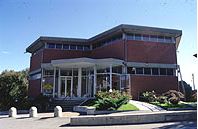
Inside, the main space of the museum is shaped as if you are under gigantic umbrellas. There are more than 1000 umbrellas and parasols on display. The history of these local umbrella-makers is quite fascinating A very protective and insular group, they developed a true culture all there own, so much so that they had their own dialectal language, understood only by them, and further creating an exclusivity to their ranks. Umbrellas made here were prized throughout Europe for their beauty and quality. How proud are the locals of their umbrella-making past? Well, the cat holding umbrella statue in front of the church in neighboring Carpugnino is one sign... There is some additional interesting information about this history on that post.
www.gignese.it/museo/
via Golf Panorama, 2
28836 Gignese (VB)
Tel: 0323 89622
Fax: 0323 208064
The museum is open from April 1 through September 30, closed on Mondays (unless the Monday is an official holiday, in which case it is open). Hours are 10:00 am to noon, and again from 3:00 pm to 6:00 pm.
As of this writing, admission is 2.50 euro, with reduced prices for groups and students.
( continued ... )
 Labels:

Tuesday, February 8, 2011
Milan: How To Get Tickets To View Da Vinci's Last Supper

Leonardo Da Vinci’s masterpiece, The Last Supper, is one of the top attractions in Milan, yet many tourists go home without having seen it, disappointed because they did make the proper preparations in advance. Here’s what you need to know about the painting, its location, and how to obtain tickets, so that you can be one of the lucky ones who returns home satisfied.
Although the painting (called L'ultima cena, or, Il Cenacolo in Italian) itself is instantly recognizable, many people may not know that its location is quite simple, small, and unassuming. Santa Maria Milan
 Santa Maria delle Grazie, in Milano, inside of which is the Last Supper.
Wednesday, October 28, 2009
Villa Ponti
 In this aerial view you can see the proximity of Villa Ponti to both the lake and the statue 'Carlone'.
Villa Ponti is a splendid 18th-century villa of historical importance, located in the center of Arona, near the shore of Lago Maggiore and just a few steps from the large statue of San Carlo Borromeo. For the past 10 years it has also been a world-class art museum, hosting exhibitions displaying masterpieces by many of the greatest painters in the world. To date over 300,000 have already had the pleasure of visiting. But before its second life as a museum, Villa Ponti already had an impressive story to tell. This fine villa was built in 1760 on the ramparts of the fortress La Rocca by Bartolomeo Pertossi, a rich Flemish merchant and a supporter of Napoleon I, who was a guest there after the Egyptian campaign. Years later, the villa was renamed after the engineer Gian Giacomo Ponti, who was an assistant to Thomas Edison and who was born in this house on December 28th, 1878.
Although there were many renovations and alterations during the 19th century, the villa still retains a good part of its original core. Today, visitors enter through the baroque front, which is characterized by a monumental entrance flanked by small wrought iron balconies and windows embellished by metal gratings. The lookout tower, which was really built to hold the water tanks, is prominently visible. Inside the villa one is first greeted by a coffee bar, created out of a former arcade. The various halls now used for the exhibitions and concerts branch off from this main entrance. Some recent shows have featured the works of Raphael and Rembrandt, Picasso, Andy Warhol, and Renoir.
Outside, the building is surrounded by a large park with ancient beeches, silver cedars, magnolias, azaleas, and rhododendrons. The gardens date back as far as the villa itself, and last underwent a major redesign at the beginning of the 1900s.
Although there were many renovations and alterations during the 19th century, the villa still retains a good part of its original core. Today, visitors enter through the baroque front, which is characterized by a monumental entrance flanked by small wrought iron balconies and windows embellished by metal gratings. The lookout tower, which was really built to hold the water tanks, is prominently visible. Inside the villa one is first greeted by a coffee bar, created out of a former arcade. The various halls now used for the exhibitions and concerts branch off from this main entrance. Some recent shows have featured the works of Raphael and Rembrandt, Picasso, Andy Warhol, and Renoir.
Outside, the building is surrounded by a large park with ancient beeches, silver cedars, magnolias, azaleas, and rhododendrons. The gardens date back as far as the villa itself, and last underwent a major redesign at the beginning of the 1900s.
Phone for further information and reservations for exhibits and concerts:
Villa Ponti
Via San Carlo, 63 - 28041 Arona (No)
Tel. +39.0322.44629
It's always a good time to discover some of the regions museums, large and small. Apart from Villa Ponti here are a few others that have already been mentioned in Stresa Sights:
Museo dell'Ombrello e del Parasole
Museo del Paesaggio - Museum of the Landscape
The Egyptian Museum - Torino
photos courtesy of il lago maggiore.com
Friday, February 20, 2009
Museo del Paesaggio -- The Museum of the Landscape
 Federico Ashton - Pecetto of Macugnaga and Monte Rosa, 1887
The true star of Lago Maggiore is, always was, and always will be, its natural scenery and splendor. No matter what beautiful palaces have been built, no matter how many restaurants there are serving delicious regional food, no matter the markets and the shopping and the music festivals, the true attraction here is the lake and the mountains themselves. Remove the natural elements and I'm not certain that people would travel here for the aforementioned sights, but remove the palaces and restaurants and markets, and people would still come, senza dubbio, without any doubt, just to sit and marvel at this incredible landscape.
 Guido Boggiani - Chestnut Wood Above Stresa - 1884
 Guido Boggiani - Chestnut Wood Above Stresa - 1884
Antonio Massara was a man who understood this very well. Born in Miena in 1878, Massara lived his entire life around these lakes. His deep passion for the area, and his conviction to convince others to appreciate it as he did, led him to two great projects in the early 1900s. He started a magazine, Verbania, and in 1909 he founded a museum, originally called “Museo Storico e Artistico del Verbano e delle Valli adiacenti”, The Museum of the History and Art of Verbania and of the Adjacent Valleys. By 1914 the name evolved to Museo del Paesaggio, The Museum of the Landscape, which it remains today.
It's a love affair, this museum... On the part of Massara, but also it's evident in all of the works here. Through the eyes of dozens of different painters, sculptors, and artists of various media, the visitor sees how so many others have seen, and then depicted, this local landscape. Of particular interest to me are the scenes that include people, structures or street scenes. I know, one can argue that they are not truly landscapes, that the buildings intrude, but Massara believed that they were, and I enjoy the glimpses of a time before photographs, into those moments captured.
 Achille Tomanetti - Ploughing at Miazzina
“In nessuna età come la nostra, inquieta e variabile, si è sentita più profondamente la misteriosa affinità che lega l’anima umana al paesaggio”
"In an era like ours, restless and variable, in one is it felt more profoundly the mysterious affinity between the human soul and the landscape."
These are Antonio Massara's own words, spoken in the turbulent years of the early twentieth century. Little did he know they would have such lasting meaning. I think, what he is trying to tell us, if I may speak for him, is to stop, pause, appreciate this. When you leave the museum and head back outside, if you look around you and see the paesaggio, the landscape, in a whole new way, then Massara has succeeded in his goal.
Web site, English version: www.museodelpaesaggio.it
The Museo del Paesaggio is now housed in three locations along the banks of Lago Maggiore in Verbania:
- Palazzo Viani – Dugnani, Verbania Pallanza, via Ruga, 44;
- Palazzo Biumi – Innocenti, Verbania Pallanza, salita Biumi, 6;
- Casa Ceretti, Verbania Intra, Via Roma, 42. This library houses the collection of the 15,000 books of the museum.
Verbania Pallanza and Verbania Intra are two different boat stations on Lago Maggiore about 2 km apart. It is an easy walk from one station to the other. Verbania can be reached in 15 minutes by car from Stresa, or 30 minutes by boat.
Open Year-Round: 10.00 to 12.00, and 15.30 to 18.30, closed Mondays.
Tel. (+39) 0323 556621
Tuesday, February 3, 2009
The Egyptian Museum In Torino
 It’s not what you think of when you think of Italian museums, and yet, Il Museo Egizio, The
 Why is it here then? The Italian part of this Egyptian history is this: Beginning in the early 1600s Torino’s wealthy Savoy family began hoarding every mummy and artifact they could
 acquire. Several kings, including Carlo Emmanuelle III and Carlo Felice, commissioned explorers to go and bring back all they could. Some personal collections were added with the others, for example the 5,268 pieces French Consul Bernardino Drovetti had collected, and the 1,200 piece private collection of Giuseppe Sossio, a wealthy Piemontese. By the late 1700s, when the public was allowed to view the massive collection, it was the first Egyptian museum in the world. It still is housed in the original building which had been built for it, at Via Accademia delle Scienze 6. Several complete renovations, such as before the 2006 Winter Olympics, have updated the museum, and the sheer size of the collections, the displays, and the bilingual information (Italian and English) makes this an almost must-see. And so much easier than going to Cairo.
The museum covers 3,000 years of Egyptian history. I recommend you give yourself the better part of a day to discover it.
The Egyptian Museum Web site, for current information - English version: www.museoegizio.it
Torino is about one hour from Stresa on major motorways.
Thursday, November 6, 2008
Museo dell’Ombrello e del Parasole
 They say that into every life a little rain must fall, and when it does here, what better way to spend that day than by visiting the Museo dell'Ombrello e del Parasole, a quirky museum dedicated entirely to those devices we use to protect ourselves from the rain. This region was the home to over 150 umbrella-making families in the 1800s, and today, housed in a building shaped like three open umbrellas, you can learn why, and view hundreds of unique umbrellas, parasols, and other items. Gignese, where the museum is located, is a picturesque little town, a bit higher up in the hills; pairing this museum visit with a lunch at an agriturismo would be a really nice way to pass the day when the weather doesn’t cooperate with your outdoor activities.
The museum is an easy 20 minute drive from Stresa by car or reachable on public buses.
Web site: http://www.gignese.it/museo/
Subscribe to:
Posts (Atom)
PLANNING A TRIP TO STRESA?

A Top Attractions Starting Point
VACATIONS AND WORKSHOPS

Before or after Stresa, plan more of your trip to Italy with Villa Vita!
CURRENCY CONVERTER

Click here for a fast and easy currency converter.
STRESA SIGHTS by DANA KAPLAN

